
Build a Bed That Feels Like a Five‑Star Stay
Start With the Right Mattress

Firmness, Support, and Spine Alignment

Cooling, Motion Control, and Edge Support
Layering That Changes Everything

Toppers: Plush Without the Pit
Protectors: Hygiene, Allergens, and Quiet Comfort
Featherbeds and Alternatives for Loft and Luxury

Thread Count Myths and What Truly Matters
Thread count stops being impressive after honest quality thresholds. Above roughly 300 to 400 in cotton percale or sateen, numbers often reflect multi-ply tricks that add weight without true durability. Feel for smoothness, check for long-staple or extra-long-staple fibers, and look at weave tightness against light. Certifications like OEKO-TEX signal chemical safety, while GOTS indicates organic integrity. Choose a set you can launder weekly without fear, because dependable softness grows with responsible washing and line drying.
Percale vs Sateen: Feel, Breathability, and Care
Percale is matte, airy, and slightly crisp; it excels for warm sleepers and humid climates. Sateen is smoother, denser, and drapier, warming light sleepers and showcasing elegant sheen. Both can be exquisite when crafted with quality cotton. Percale often wrinkles more but softens irresistibly; sateen resists wrinkling but may sleep warmer. Match weave to climate, pajamas, and duvet weight, and rotate sets seasonally. Your ideal handfeel should invite you in, not merely impress at first touch.
Fiber Choices: Cotton, Linen, and Blends That Last
Egyptian, Pima, and Supima denote fiber origin and length, not instant luxury. Linen offers airy cool and beautiful rumple; bamboo viscose brings drape but needs careful sourcing; blends can improve durability. Prioritize reputable mills and finishing that retains softness after dozens of washes. Test a pillowcase before buying a full set, launder it twice, and sleep on it for three nights. The fiber that keeps you comfortable through laundry cycles is the one that truly shines.
The Art of the Pillow Menu

Match Loft and Fill to Your Sleep Position

Down, Foam, Latex, and Hybrids Compared
Allergy-Friendly Choices and Refresh Strategies
Make the Bed Like a Pro
Triple-Sheeting for Clean, Cool Layers
Layer a flat sheet over the fitted sheet, place a blanket or light duvet next, then another flat sheet on top to encase shared layers between crisp cotton. This system improves hygiene, simplifies washing, and regulates temperature for mixed sleepers. Choose breathable blanket weaves and avoid heavy inserts in warm months. When it is time to launder, changing the top sheet restores freshness quickly without wrestling the duvet. Freshness should be effortless, not a weekly struggle.
Hospital Corners and Tension for That Smooth Finish
Hospital corners are not about rigidity; they’re about secure geometry that prevents nightly drift. Center the sheet, tuck the foot, form a neat triangle at the corner, then smooth and tuck the side. Maintain even tension from head to toe, leaving shoulder-height untucked for movement. The result looks polished and feels stable under restless legs. Practice twice and it becomes second nature, rewarding you with that sleek, cool surface every time you slide into bed.
Duvet Fluffing and Pillow Staging That Invite Sleep
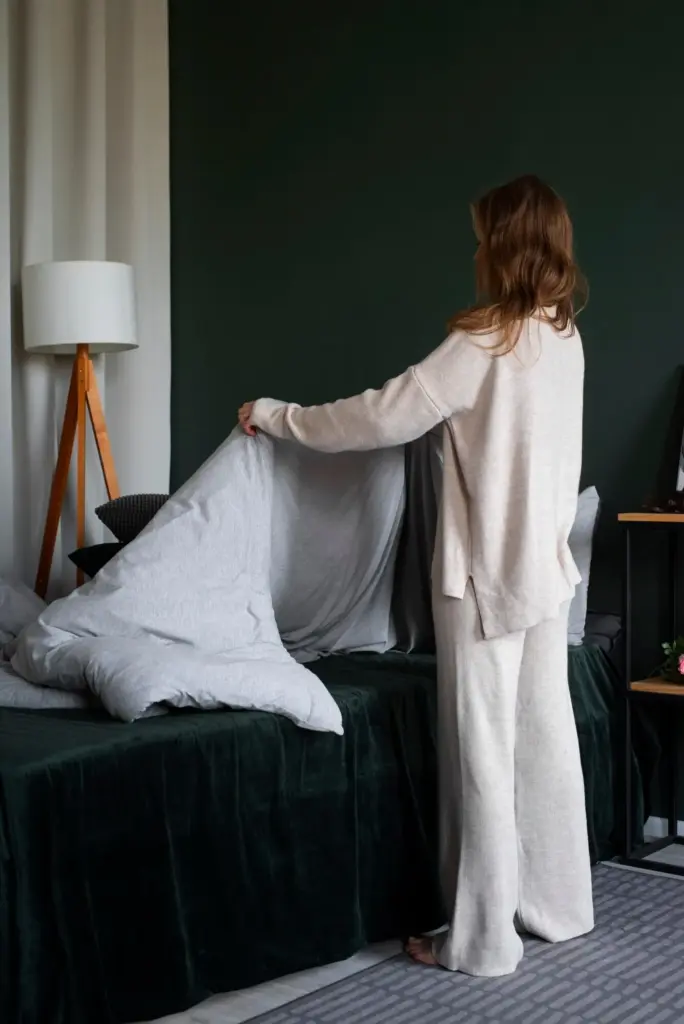
Hold the duvet by top corners, shake in short bursts to distribute fill, then smooth with your forearms to flatten quilting. Stage sleeping pillows upright for support and decorative shams in front for visual softness. Rotate placements seasonally to refresh the look without buying more. A thirty-second reset each morning preserves loft and avoids cold spots. When your bed looks inviting, you are more likely to keep other routines that make restorative sleep consistent.
Temperature, Texture, and Quiet Luxury

Create a Microclimate That Suits Your Body
Weights, Fill Power, and Seasonal Swaps

Care, Longevity, and Hygiene
Bring It All Together on Any Budget


All Rights Reserved.